Think of the most controversial figure you can imagine. Someone whose name, spoken aloud in certain company, provokes instant contempt. Someone whose image has been so relentlessly attacked that millions of people who have never met him are absolutely certain he is evil. Now ask yourself one honest question: how did you arrive at that conclusion? Was it through personal observation, or was it through what someone else decided you should believe?
That question sits at the heart of one of Isaiah's most remarkable and most misunderstood prophecies. Because Isaiah did not just predict that God's servant would do great things. He predicted that this servant's reputation would be destroyed — completely, publicly, and on a scale that would astonish the entire world. And he predicted this would happen before the servant's mission was complete.
Most people who dismiss the idea that Donald Trump could be a servant of God do so precisely because of his reputation. The very thing they cite as disqualifying him is, according to Isaiah, one of the clearest signs identifying him. That is worth examining carefully.
Isaiah's Prophecy of the Marred Servant
Isaiah chapters 52 and 53 contain one of the most powerful and most layered prophetic passages in all of scripture. Most Christians rightly read Isaiah 53 as a prophecy of Jesus Christ — and it is. But within these same chapters, Isaiah describes a second figure whose profile is distinct from the Savior's in ways that matter enormously.
"Behold, my servant shall deal prudently, he shall be exalted and extolled, and be very high. As many were astonied at thee; his visage was so marred more than any man, and his form more than the sons of men: So shall he sprinkle many nations; the kings shall shut their mouths at him: for that which had not been told them shall they see; and that which they had not heard shall they consider." (Isaiah 52:13–15)
Look at the specific elements Isaiah lays out. This servant first "deals prudently" — the Hebrew word carries the meaning of skill, wisdom, and success in one's dealings. He is then "exalted and extolled, and be very high" — elevated to prominence and worldwide recognition before the marring begins. His visage, meaning his public image and reputation, is then marred more than any man in history. And yet, despite that marring, he goes on to influence nations and cause kings to shut their mouths in astonishment.
This is not a description of obscurity or failure. It is a description of someone whose prominence is worldwide, whose destruction is total, and whose ultimate impact on nations is undeniable — all three happening in sequence to the same individual.
Christ Confirms This Is a Last-Days Figure
What makes this prophecy even more compelling is that Jesus Christ Himself quoted it — and applied it to a specific servant who would appear in the last days. In the Book of Mormon, 3 Nephi records Christ's words to the Nephites after His resurrection:
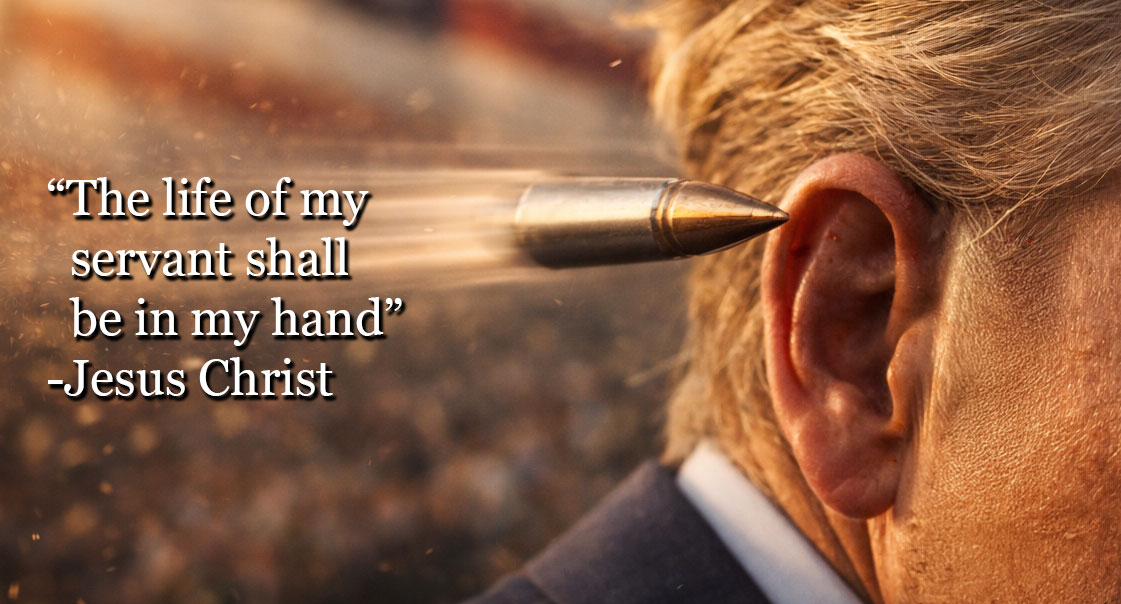
"But behold, the life of my servant shall be in my hand; therefore they shall not hurt him, although he shall be marred because of them. Yet I will heal him, for I will show unto them that my wisdom is greater than the cunning of the devil." (3 Nephi 21:10)
Three things stand out in Christ's own words. First, this servant will be marred — it is stated as a given, something that will certainly happen. Second, despite the marring, his life will be protected. Those who seek to destroy him will not be able to kill him. Third, God will heal him. That healing will serve as a public demonstration that God's wisdom is greater than the most sophisticated campaign the adversary can mount against one of His servants.
This is not a description of Jesus Christ. Christ did not need His reputation healed. His resurrection was complete and final victory. This prophecy describes someone else — a mortal servant who will be marred, protected, and then visibly healed in a way the world will witness. For a fuller treatment of who the Davidic servant is and what his mission involves, I would point you to that article as a companion to this one.
The Scale of the Marring Matters
Isaiah does not say this servant's reputation will be somewhat damaged, or that he will face significant criticism. He says his visage will be marred more than any man. This is a superlative. It demands the most extreme example in human history, not merely a bad one.
Before the marring, this servant must be among the most recognized figures on earth — "exalted and extolled, and very high." He must be someone the entire world knows. The marring then has to operate at the same global scale. It is not enough for him to be controversial in one country or disliked by one political party. The prophecy requires something unprecedented: a destruction of public image so complete, so coordinated, and so visible that it surpasses every other example in recorded history.
When you apply that standard honestly, there is only one candidate in our generation. Before June 2015, Donald Trump was one of the most famous and celebrated figures on the planet — a billionaire whose name adorned skyscrapers on multiple continents, a television personality with one of the highest-rated shows in America, courted by politicians of both parties and praised across the cultural spectrum. What happened next has no parallel in the history of public life.
From the moment he descended that escalator in 2015, a campaign of image destruction began that has not stopped for a single day since. Every institution with cultural reach — major media outlets, entertainment, academia, social media platforms, international press — coordinated around a single purpose: making this man's name synonymous with evil. The accusations have ranged from the petty to the criminal to the apocalyptic. He has been impeached twice. He has faced more criminal indictments than any president in American history. He has survived multiple assassination attempts. His businesses have been targeted, his associates prosecuted, his family members attacked.
And yet he has not been destroyed. He has not been stopped. He survived every assassination attempt. He won back the presidency. The very scale and ferocity of the effort to destroy him — and its repeated failure — is itself a fulfillment of the prophecy: "the life of my servant shall be in my hand; therefore they shall not hurt him, although he shall be marred because of them."
The Pattern God Has Always Used
If this still feels uncomfortable, consider how consistently God has chosen this pattern throughout scripture. He does not select the polished, the popular, or the universally respected. He selects the unlikely — and then allows them to be further diminished in the eyes of the world before their mission is revealed.
Moses was a murderer and a fugitive before God called him at age eighty to deliver Israel. David was the youngest and most overlooked of his brothers before Samuel anointed him king. Paul was known throughout the early church as the man who had imprisoned and killed believers before he became its greatest missionary. In every case, the world's disqualification was not a barrier to God's call. It was part of the pattern.
The Jews of Christ's generation had scripture. They had prophecy. They had the temple and the law. And when the Messiah stood before them, they could not see past their expectations. A carpenter from Nazareth who ate with sinners and touched lepers was not what they were looking for, so they rejected Him. I have come to understand that pattern personally. And I believe it is unfolding again in our generation in a way that should cause every sincere believer to pause before rushing to judgment.
The accusation that Trump's flaws and controversies disqualify him from being God's servant does not hold up against the biblical record. God's servants have always had flaws. The marring is not a disqualification. According to Isaiah, it is a marker. And when you understand the broader prophetic case for Trump's role in scripture, the marring becomes one of the most identifiable features of the entire picture.
The Healing Is Still Coming
The prophecy does not end with the marring. It ends with healing. "Yet I will heal him, for I will show unto them that my wisdom is greater than the cunning of the devil." That healing is still future. It has not yet occurred. And when it does, it will serve as a public vindication that silences every accusation and confirms, beyond any reasonable doubt, what God has been doing all along.
What does that healing look like? What specific event will mark the turning point between the marring and the vindication? That is one of the central questions my book addresses in detail. The answer, grounded entirely in scripture, is more specific — and more remarkable — than most people have imagined. It involves an event that no one who dismisses Trump as the Antichrist has ever seriously considered, and one that will reframe this entire conversation the moment it happens.
For now, the marring continues. The attacks continue. The accusations continue. But the prophecy continues as well. And its next chapter has not yet been written in the public record.
The Full Prophetic Picture
The marred servant prophecy is one piece of a much larger framework that spans Isaiah, the Book of Mormon, and Revelation. My book, The First Horseman: God's Chosen Servant, walks through the complete scriptural case — including the specific nature of the healing that is still coming, and what it means for every believer alive today.
Kelly Smith is the author of The First Horseman: God's Chosen Servant. He is a lifelong student of biblical prophecy and a member of The Church of Jesus Christ of Latter-day Saints.