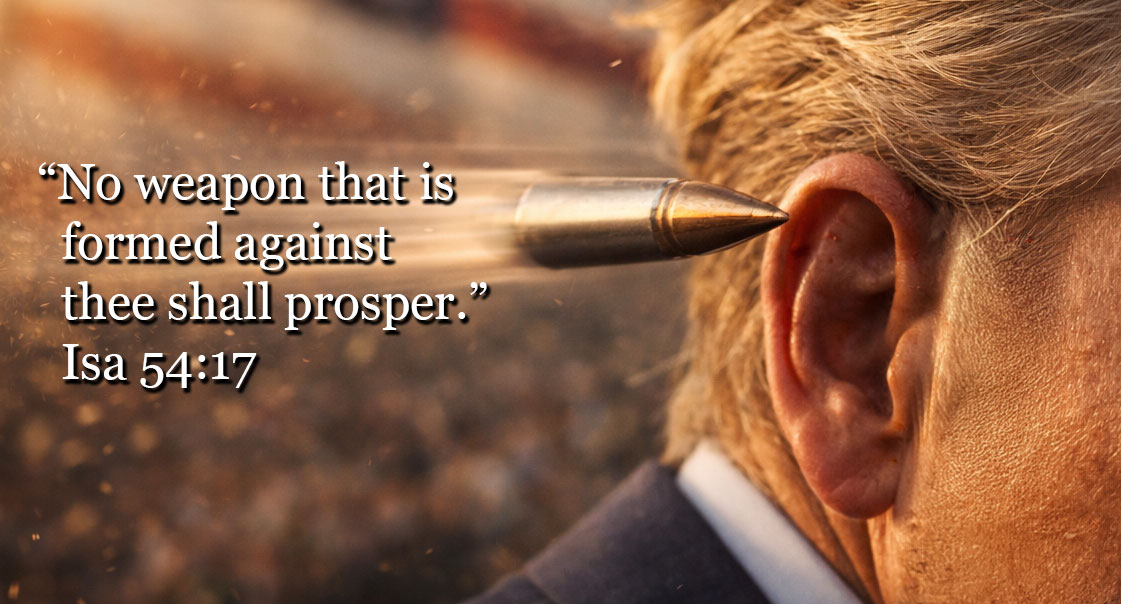
The question has been asked in thousands of churches, living rooms, and online comment sections since 2015. Is Donald Trump a figure of biblical prophecy? Is he chosen by God? Is he the fulfillment of something the prophets saw?
Most of the answers you have encountered probably fell into one of two camps. The enthusiastic camp says yes, absolutely, God raised him up, he is Cyrus, he is Jehu, he is God's wrecking ball. The skeptical camp rolls its eyes and says that is exactly the kind of magical thinking that embarrasses serious Christians.
Both camps are missing something. The question deserves a genuine answer grounded in what the text actually says.
Start with What Scripture Actually Describes
The Bible describes several types of figures God uses in the last days. Some are spiritual leaders. Some are military deliverers. Some are political agents raised up to accomplish specific temporal purposes, whether they are personally righteous or not.
Isaiah 45 describes one of the most striking examples. God calls a ruler named Cyrus His anointed, His shepherd, even though Cyrus was a pagan Persian king who did not know God:
"Thus saith the LORD to his anointed, to Cyrus, whose right hand I have holden, to subdue nations before him... I will go before thee, and make the crooked places straight... For Jacob my servant's sake, and Israel mine elect, I have even called thee by thy name: I have surnamed thee, though thou hast not known me." (Isaiah 45:1-4)
God uses that word: anointed. The same word used for kings and priests. God called a pagan ruler His anointed to accomplish a specific political mission, restoring the Jews to their homeland and enabling the rebuilding of the temple. Cyrus did exactly that.
The question is not whether God uses imperfect political figures. He clearly does. The question is whether the pattern Scripture describes matches the figure before us.
Isaiah Describes Someone Specific
The Book of Isaiah contains a series of poems that scholars call the Servant Songs. In them, Isaiah describes a figure who will appear in the last days with a specific mission to the nations. One detail stands out above all others:
"As many were astonied at thee; his visage was so marred more than any man, and his form more than the sons of men: so shall he sprinkle many nations; the kings shall shut their mouths at him." (Isaiah 52:13-14)
Marred more than any man. Isaiah is describing the most publicly attacked, reputation-destroyed individual in recorded history. Not among the top ten. Not in the same category as others. More than any man. I examine why that destroyed reputation is itself part of the prophecy in a separate article — and why it is one of the most specific and verifiable markers Isaiah gives us.
That is a measurable claim. You can test it against history. Who, in the modern era of global media, has had their name and character attacked on a scale without any historical parallel? Who has faced simultaneous campaigns across every platform, every institution, every lever of cultural power?
The answer is not subtle.
The Promise That Comes with the Marring
Isaiah and the later prophets who built on his words do not stop at the marring. They describe what follows it. And what follows it is extraordinary.
The servant is protected despite everything thrown at him. He survives what should have destroyed him, not once but repeatedly. And then he is visibly restored in a way that demonstrates, before the watching world, that God's purposes cannot be stopped by human schemes.
That restoration, that healing, is described as a sign to the nations. Not a quiet spiritual event. A visible one. Kings will see it. Nations will take note. And those who have watched this man be relentlessly attacked will witness a reversal that has no natural explanation. The full Davidic servant framework in Isaiah and the Book of Mormon lays out exactly what that healing looks like and why Christ Himself called it one of the great signs of the last days.
We have not seen that full restoration yet. But we are watching the events that precede it.
The First Horseman of Revelation
The Book of Revelation opens its account of the seven seals with four horsemen. The first horseman has generated enormous debate:
"And I saw, and behold a white horse: and he that sat on him had a bow; and a crown was given unto him: and he went forth conquering, and to conquer." (Revelation 6:2)
The white horse signals righteousness or divine commission. The bow is a weapon of war at long range. The crown, given to him rather than inherited, speaks of a bestowed authority. And he goes forth conquering, not to destroy, but to subdue and bring order.
This is not a villain. The four horsemen are often read as parallel figures of destruction, but a careful reading of the text separates the first from the others. The other three bring war, famine, and death. The first brings conquest and a crown.
Who in our generation fits that description? Who rides, so to speak, with a commission that has been given rather than inherited, who goes forth in a conquering mode, and who operates in a context the other horsemen follow?
This Is Not About Blind Devotion
Nothing in this analysis requires you to think Donald Trump is a saint. The biblical pattern of God's chosen agents is full of deeply flawed individuals. Moses had a temper and a criminal past. David committed adultery and arranged a murder. Cyrus worshipped other gods. Samson's personal life was a disaster from start to finish.
God's use of a person for a specific purpose does not mean that person is morally perfect, spiritually mature, or even aware of what God is doing through them. It means God's purposes are being accomplished, and the vessel He chose happens to be the one before you.
The real question Scripture asks is not whether we approve of the person. It is whether we can recognize what God is doing, even when He does it in a way we would not have chosen. That has always been the test.
It was the test for those who encountered Moses. It was the test for those who encountered Cyrus. It is the test for our generation now.
What Comes Next
The prophetic narrative does not end with a man on a white horse. It moves toward a kingdom, a gathering, a restoration of God's people, and ultimately the return of Christ. The servant described in Isaiah is not the end of the story. He is a chapter in a much larger story, one that ends with every knee bowing and every tongue confessing.
But the chapters matter. Missing what God is doing in the chapter we are living in is a costly mistake. The prophets who wrote these words were not writing to fill space. They were warning their readers, across the centuries, to pay attention when the signs appeared. Understanding the hidden structure of Revelation and where the First Horseman fits within it is one of the most clarifying things a serious student of prophecy can do right now.
The signs are appearing now.
The Full Scriptural Case
The First Horseman: God's Chosen Servant examines Isaiah's servant songs, the structure of Revelation, and the prophetic patterns that connect them in complete detail. It is the most thorough scriptural case you will find on this subject.
Kelly Smith is the author of The First Horseman: God's Chosen Servant. He is a lifelong student of biblical prophecy and a member of The Church of Jesus Christ of Latter-day Saints.