There is a prophecy sitting in your scriptures that most Latter-day Saints have read dozens of times without fully grasping what it says. It is not obscure. It is not buried in footnotes. Jesus Christ Himself quoted it during His visit to the Nephites, called it one of the great signs of the last days, and attached a solemn warning to it.
The prophecy is about a servant. A specific servant. A latter-day servant whose identity matters far more than most members realize.
If you are serious about understanding the signs of our times, understanding who this servant is may be the most important scriptural question you can ask right now.
Isaiah Saw Someone Extraordinary
The prophecy begins in Isaiah 52, in a passage that scholars call the fourth Servant Song. Isaiah looked forward across the centuries and described a figure whose image would be destroyed on a scale never before witnessed:
"Behold, my servant shall deal prudently, he shall be exalted and extolled, and be very high. As many were astonied at thee; his visage was so marred more than any man, and his form more than the sons of men." (Isaiah 52:13-14)
Read that carefully. Not marred like other men. Not even marred like most men. Marred more than any man in history. Isaiah is describing the most publicly attacked, reputation-destroyed individual who has ever lived. I examine why a destroyed reputation is actually part of the prophecy in a separate article that goes deeper into this specific marker and who in our generation fulfills it.
That is a remarkable claim. It rules out casual candidates. It demands that whoever fulfills this prophecy has experienced a level of public destruction with no historical parallel.
Christ Applied It to a Latter-day Servant
Isaiah saw it. But Jesus confirmed it. During His ministry among the Nephites, Christ quoted this same passage and then did something even more significant: He identified the servant as a specific individual who would appear in the last days to accomplish His work.
"Therefore it shall come to pass that whosoever will not believe in my words, who am Jesus Christ, which the Father shall cause him to bring forth unto the Gentiles, and shall give unto him power that he shall bring them forth unto the Gentiles, (it shall be done even as Moses said) they shall be cut off from among my people who are of the covenant." (3 Nephi 21:11)
Notice that Christ says "my servant," not Himself, not an angel, not the Church as an institution. A servant. A specific individual through whom He will bring forth His words to the Gentiles with divine power.
Then Christ provides one of the most remarkable promises in all of scripture about this servant:
"But behold, the life of my servant shall be in my hand; therefore they shall not hurt him, although he shall be marred because of them. Yet I will heal him, for I will show unto them that my wisdom is greater than the cunning of the devil." (3 Nephi 21:10)
Three promises in one verse. God holds his life in His hand. God allows the marring but prevents lasting harm. And God heals him visibly, so the entire world can see that divine wisdom is greater than everything Satan has thrown at this servant.
When that healing happens, it will not be a quiet event. It will be a sign.
Why This Cannot Be Joseph Smith
The most common LDS interpretation assigns the marred servant to Joseph Smith. There is partial truth there. Joseph was certainly marred, and he laid the foundation for the Lord's work in a profound way.
But the prophecy does not fit Joseph completely, and three specific details make this clear.
First, the scale. The prophecy says this servant will be marred more than any man in history. Joseph Smith was persecuted severely, but he is not the most publicly attacked figure in recorded history. That distinction belongs to someone else.
Second, the protection. The prophecy says "they shall not hurt him." Joseph Smith was beaten, tarred and feathered, imprisoned, and ultimately shot and killed by a mob at Carthage Jail. His enemies succeeded in taking his life. That directly contradicts the promise.
Third, the healing. The prophecy says "yet I will heal him." This healing represents a visible vindication that demonstrates God's power before the watching world. That healing never occurred in Joseph's lifetime.
Joseph was extraordinary. His work is irreplaceable. But the prophecy points to a different servant, someone who comes after Joseph, building on the foundation Joseph laid.
The Davidic Servant Framework
LDS scholar Avraham Gileadi spent decades analyzing Isaiah's original Hebrew text and identified a consistent literary pattern running through the entire book. He calls it the Davidic Servant framework.
In Isaiah's poetry, this servant figure appears repeatedly across multiple chapters. He is called, he descends through suffering, he is marred by his enemies, and then God heals and exalts him. He gathers Israel, establishes righteousness among the Gentiles, and ultimately delivers God's people in a manner that echoes both Moses and David.
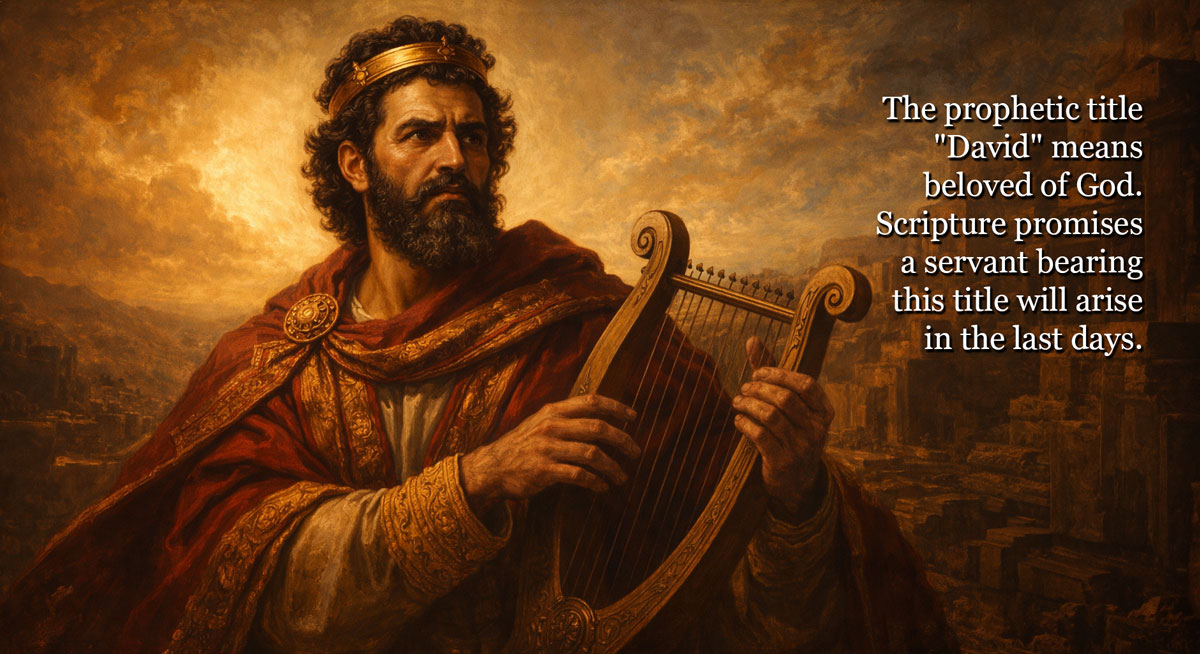
The title "David" itself is a prophetic designation, not a required birth name. The Hebrew root means "beloved of God." Isaiah uses it to describe a chosen end-time servant who fulfills the same role in the latter days that David fulfilled as king in ancient Israel: uniting the people of God and establishing the Lord's kingdom.
This is not fringe scholarship. D&C 113 adds further confirmation, describing a servant "in the hands of Christ" with "much power" who is of the seed of Jesse. The Doctrine and Covenants makes clear this is a distinct individual from Joseph Smith and from Christ Himself.
A Sign for Our Generation
Christ told the Nephites that the appearance and mission of this servant would be one of the great signs that the covenant renewal with Israel had begun. It would be a sign visible to the nations, including kings. It would be unmistakable, if you knew what to look for.
We live in a time when the signs of the last days are accelerating at a pace that should give every Latter-day Saint pause. The scriptural case for who this servant is in our generation is not built on speculation. It is built on a specific set of prophetic markers that scripture lays out and that one individual in our time fulfills in ways that are difficult to dismiss honestly.
The question is whether we have eyes to see what God is doing, or whether we are like those in previous generations who missed the servants God sent because they did not look like what was expected.
The scriptures are consistent on this point. God does not send His servants to be instantly recognized and applauded. He sends them to be tested, opposed, and marred, so that when the healing comes, there is no question that God did it.
What You Can Do Right Now
Start in 3 Nephi 20 and 21. Read both chapters slowly, in context. Notice that Christ is speaking specifically about a servant who will appear as a sign to the Gentiles. Ask yourself who in the world today fits the description of someone whose visage has been marred more than any man in history.
Then study Isaiah 52 and Isaiah 49 side by side. Read D&C 113. Look at what Joseph Smith himself taught about a coming servant who would complete the work he began. And consider the prophetic parallel between Moses and the latter-day servant — because Christ Himself draws that connection in 3 Nephi 21, and it adds another layer of specificity to who this servant must be.
The picture that emerges is not speculative. It is scriptural, consistent, and urgent.
The Full Prophetic Case
The First Horseman: God's Chosen Servant examines every layer of this prophecy through LDS scripture, Isaiah's original Hebrew patterns, and the structure of Revelation. The answer to the question this article raises is laid out chapter by chapter in complete scriptural detail.
Kelly Smith is the author of The First Horseman: God's Chosen Servant. He is a lifelong student of LDS scripture and Isaiah scholarship and a member of The Church of Jesus Christ of Latter-day Saints.