There is a short list of names that can instantly produce a physical reaction in people. Say them in the wrong room and watch what happens to faces, voices, and posture. Adolf Hitler. Mao Zedong. Joseph Stalin. Osama bin Laden. These are names that most people agree belong on any list of history's most hated figures, and there is legitimate reason for strong feelings about what those men did and what they stood for.
But history also gives us names that belong on a different kind of list. Names that were hated not because of what those people had done wrong, but because of what they represented, what they claimed, or what they were willing to stand for. Mohammed. Joseph Smith. Jesus Christ. These men were not loved in their own time. They were despised, mocked, driven from their homes, and in some cases killed by people who were absolutely certain they were right to do it.
And then there is Donald Trump.
Whatever you believe about him, you cannot deny that the intensity of feeling surrounding his name is unlike anything the modern world has seen in a living public figure. People who have never met him, never spoken to him, and whose lives he has never directly touched feel a hatred for him that colors everything they see and hear. That is not a political observation. That is a spiritual one.
What Hatred Actually Does to a Soul
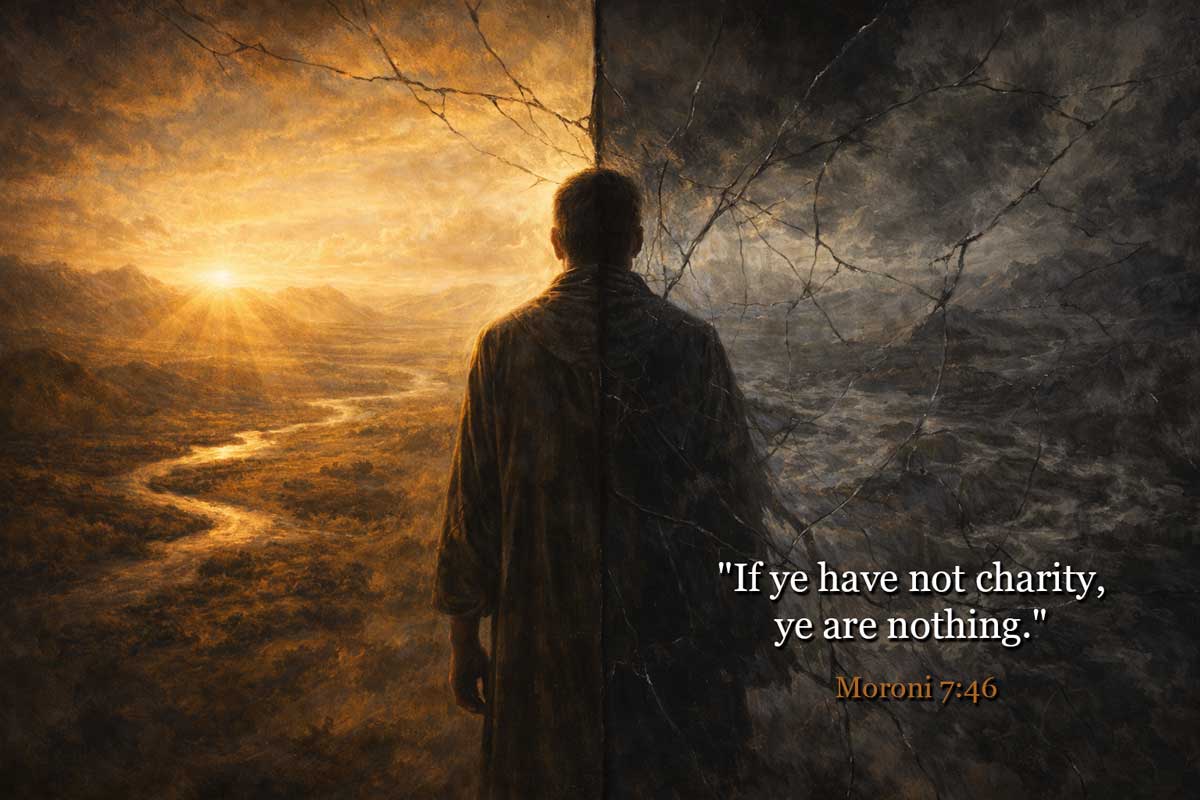
Here is the thing about hatred that most people never stop to examine. It does not stay in one place. Once you allow it in, it spreads. It colors everything you see through the same dark filter, and you stop being able to tell the difference between what is real and what the hatred is showing you.
I am not talking about justified anger or righteous indignation. Those are different things. I am talking about the kind of deep, settled hatred that roots itself in a person's soul and begins to function as a lens through which all information passes. Once that lens is in place, truth cannot get through without being distorted.
This is one of Satan's most effective tools, and it is effective precisely because it does not feel like a spiritual problem. It feels like clarity. It feels like justice. It feels like you are simply recognizing evil and refusing to tolerate it. But what it actually does is hand him the keys to your discernment.
If he can get you to hate anything deeply enough, he can get you to deny anything. He can make you incapable of recognizing truth when it stands right in front of you, because the hatred will reprocess it, reframe it, and hand it back to you as further evidence of what you already believe. It is one of the most elegant traps he has ever designed, because the person caught inside it has no idea they are trapped.
A Message I Did Not Want to Read
This is not abstract to me. I received a message just this morning from someone I care about, someone whose faith I have respected for years. He is furious with me over what I have written in The First Horseman. His message was stark, angry, and deeply sad to read.
He made sweeping claims about what will happen to me once Donald Trump is proven wrong. He was not engaging with the scriptural arguments. He was not asking questions. He was venting something that had clearly built up inside him, and the tone of it was not what I expected from a man of faith. It was what I would expect from someone who has been carrying a heavy emotional weight for a long time.
That is what hatred does. Even in people who love God and serve faithfully in the Church, if that emotion is allowed a foothold on any subject, it will work its way inward until it starts affecting how they see everything else. His anger was not really about me, or even about Donald Trump. It was about what he could no longer see clearly because the hatred had been sitting on the lens for too long.
I pray for him. And I say that without any sense of superiority, because I have had my own battles with emotions that threatened to cloud my judgment. We all have. That is why this matters so much.
The Same Pattern, Playing Out Again
Consider the hatred that has surrounded Joseph Smith from the moment he opened his mouth about the First Vision. People who had never read the Book of Mormon, who had never sat across from him or prayed about his claims, despised him completely. They burned his printing press, drove the Saints from state after state, and ultimately murdered him in a jail cell. And every single person who participated in that persecution believed they were doing the right thing.
That pattern is still alive today. There are people who hate Joseph Smith with a passion they cannot fully explain, who will never pick up the Book of Mormon and read it sincerely, because the hatred makes it impossible to approach the subject with any openness at all. This is the same principle explored in detail in the article on the marred servant prophecy — the hatred directed at God's servants is not incidental. It is part of the pattern.
The Old Testament patriarch Joseph, the son of Jacob sold into Egypt, made powerful covenant promises regarding his latter-day descendants. Those promises speak of a choice seer who would be raised up from Joseph's own lineage, whose name would be the same as his father's name, and whose work would be of enormous worth to his people. What Joseph of Egypt saw about the Prophet Joseph Smith should give every serious student of scripture reason to pause. Those prophecies were specific, ancient, and came to pass exactly as given.
And the world mocked him and hated him for it. For a deeper look at how God raises up His servants and why they are always opposed, that article lays the full scriptural framework out clearly.
An Incredible Future That Few Can See
The same God who foreordained Joseph Smith millennia before he was born is still working with the same precision today. The prophets spoke of a latter-day Davidic figure who would arise in a way quite different from Joseph Smith. His mission is different. His path is different. The persecution he has faced is, if anything, even more public and more intense.
The Book of Mormon describes a servant whose image would be marred more than any man, whose very appearance would astonish nations and kings, and who would ultimately be healed in a way that proves to the world that God's wisdom is greater than the cunning of the devil. That prophecy, found in 3 Nephi 21:10, is not about Joseph Smith. It is about someone in our time. And if you look at what scripture actually says about this servant, the case is remarkable.
But you can only see it if the lens is clean.
There will come a day when what this man has endured for the covenant people of God will be fully understood. Scripture speaks of a future day when the redeemed will sing the Song of Moses, the servant of God. That song was sung the first time at the shores of the Red Sea, when a people who had been enslaved and beaten stood and watched God deliver them completely. That song will be sung again. And the people who sing it will understand, in a way they cannot today, what it cost the servant who led them to that shore.
Just as billions of people will one day revere what Joseph Smith did in restoring the fulness of the gospel, there will come a time when this latter-day servant is recognized for the role he played in accomplishing what God needed done in the last days. That recognition requires being able to see past the hatred. And that is exactly what Satan does not want you to do.
People have also asked whether this man could be the Antichrist rather than God's servant. That question deserves a careful scriptural answer, and this article addresses it directly. The short answer: hatred is often the engine behind that accusation, and it leads people away from discernment rather than toward it.
What You Can Do About It
I am not asking you to love Donald Trump, or to agree with every decision he has ever made, or to abandon your political instincts. I am asking you to do something much simpler and much harder at the same time. Examine your own soul and ask honestly whether hatred has taken root in there somewhere.
It does not matter who or what you hate. The mechanism is the same. If that emotion has been allowed to settle in, it has already begun doing damage to your spiritual vision that you may not even be aware of. The adversary is not picky. He will use hatred of anyone or anything to accomplish the same result: to get the lens dirty enough that you stop seeing clearly.
The scriptures call us to the kind of clear-eyed discernment that can only come from a soul that has been swept clean of the emotions that distort judgment. That is what the Spirit requires to operate in you. And that is worth far more than being right about any political figure.
Kelly Smith is the author of The First Horseman: Donald Trump and Biblical Prophecy. He is a lifelong student of biblical prophecy and a member of The Church of Jesus Christ of Latter-day Saints.